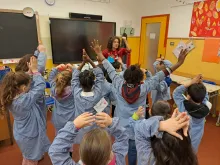
Ritorno Com’E.Ro. is an educational project that supported children and adolescents in Emilia-Rmagna to recover from the flood that affected the region in a May 2023. It promoted emotional well-being, social skills, and preparedness for future emergencies.
Map
Ritorno Com'E.Ro
General Information
The Ritorno Com’E.Ro. project was launched by Save the Children Italia in response to the devastating floods that struck Emilia-Romagna in May 2023. Its primary aim was to restore educational continuity for children and adolescents affected by the disaster, while fostering resilience and awareness of risk prevention within the school community. The initiative ran from November 2023 to May 2024 and involved 54 classes across five schools, reaching more than 1,100 students. Alongside classroom activities, the project offered free summer programs for families impacted by the floods, ensuring that even children with disabilities could participate thanks to specialized educators.
The project was created after the severe floods in Emilia-Romagna in May 2023, which disrupted schools and community life. Save the Children launched Ritorno Com’E.Ro. to restore educational continuity, provide psychosocial support, and strengthen resilience among children and educators. It also aimed to promote disaster preparedness and risk awareness in affected communities.
Hazard Type
Geographical Scope - Nuts
Population Size
Population Density
Needs Addressed
Ritorno Com’E.Ro.” addresses the disruption of education and psychosocial well-being caused by the floods in Emilia-Romagna in May 2023. The disaster damaged schools, interrupted learning, and created emotional distress among children, families, and educators. This situation increased vulnerability, reduced access to safe educational spaces, and highlighted the need for preparedness and resilience in the face of future emergencies. The project tackles these challenges by restoring educational continuity, providing psychosocial support, and strengthening the capacity of schools and communities to respond to crises. It also addresses the lack of risk awareness and preventive measures, aiming to reduce the long-term impact of disasters on children’s development and community cohesion.
Students affected by the flood are the main target of the project. However, the initiative ensures participation of children with disabilities or special educational needs by providing dedicated educators and tailored activities.
The project coordinates schools, municipalities (e.g., Faenza and Unione della Romagna Faentina), trained facilitators/educators, and a private partner (BMW Italia). It delivers structured, multi‑session labs on different topics, such as resilience, safety, emergency and awareness. It also provides training training on educational‑psychosocial response to teachers and educators, and funded access to summer centers to maintain educational continuity after the floods.
The project ensures safe and accessible learning environments for children through targeted facility repairs, operational logistics, and alternative service access (such as summer centers and online platforms).
The primary purpose is to empower children with knowledge and skills for resilience and safety. This includes helping them understand risks, develop coping strategies, and maintain educational continuity after a disaster. The engagement also aims to strengthen their emotional well-being and sense of security, ensuring they feel supported and capable of responding to emergencies in age-appropriate ways.
Children are engaged through experiential and participatory methods. These include in-class workshops on resilience and emergency preparedness, interactive exercises that foster teamwork and problem-solving, and digital learning via the “Feel Safe” platform. Activities are designed to be hands-on and relatable, encouraging active involvement rather than passive learning, and creating a safe space for expression and dialogue.
Children’s influence in the project is primarily at the programmatic and classroom level, where they help shape activities in labs and summer centers, express their needs, and practice safety behaviors. Educators and facilitators adapt content based on these inputs, improving the learning climate and day-to-day experience.
The project delivers meaningful, child‑level capacity‑building and contributes to long‑term empowerment through skills, inclusion, and continuity of services.
Vulnerable Groups
Governance
Emergency Preparedness
Infrastructure Readiness
Engagement Level
Empowerment Level
Implementation
The project adopts a child-centered resilience approach by combining psychosocial support with disaster preparedness education, helping children recover emotionally while gaining practical safety skills. A blended learning model integrates in-class workshops with the interactive “Feel Safe” digital platform, ensuring continuity beyond the classroom. Its inclusive design provides tailored support for children with disabilities and special educational needs through dedicated educators. Community-based recovery is reinforced by free summer centers that maintain educational continuity and reduce post-disaster learning gaps for families. This effort is enabled by an innovative public-private partnership between Save the Children, local municipalities, and BMW Italia, which contributes funding and logistical resources.
Italian
Save the Children Italia
Save the Children Italia has a high level of experience in Disaster Risk Management (DRM), particularly in supporting children during emergencies. More specifically, the work of the Emergecy Unit of Save the Children Italia spans all DRM phases: mitigation and prevention through disaster-risk education, preparedness via training and planning, response with immediate aid and psychosocial support, and recovery through safe spaces, education continuity, and child protection. They have extensive experience in national emergencies, such as the 2016–2017 Central Italy earthquakes, and collaborate closely with civil protection authorities. Additionally, they develop practical manuals and toolkits for frontline staff, demonstrating their capacity to translate DRM principles into actionable interventions for children in both acute and longer-term emergency contexts.
The actors involved include:
- Save the Children Italia: project lead and implementer.
- Local Schools: primary and secondary schools in the Unione Romagna Faentina.
- Municipalities : Comune di Faenza and other local authorities for coordination and access to facilities.
- BMW Italia: financial and logistical support (€500,000 donation and vehicles).
- Educators & Animators: deliver workshops and summer programs.
- Families & Children: direct beneficiaries and active participants.
Implementation steps include:
- Identify affected schools, vulnerable children, and community priorities after the floods.
- Secure agreements with municipalities and financial partners for funding and resources.
- Develop workshop content (resilience, emergency preparedness, safety) and digital resources via the Feel Safe platform.
- rain teachers and educators on psychosocial support and emergency response.
- Conduct classroom labs.
- Collect data on participation, learning outcomes, and community engagement for continuous improvement.
The project is built on a sustainable mix of internal and external resources, ensuring both effective implementation and scalability. Local schools, municipalities, and educators provide facilities, staff, and community engagement, creating strong roots within the territory. At the same time, external partners bring essential support, such as expertise, program design, and coordination, financial backing and logistical resources. This balanced approach avoids full dependency on external donors while leveraging specialized knowledge and funding to deliver impactful activities.
The project follows a structured, multi-phase approach with clear timelines and monitoring:
- Assessment Phase: identifying affected schools and vulnerable children post-flood.
- Design Phase: developing workshops, digital tools, and inclusion strategies.
- Capacity Building: training teachers and animators on psychosocial and emergency response.
- Implementation: delivering classroom labs.
- Infrastructure Support: rehabilitation of cultural spaces and provision of logistics.
- Monitoring & Feedback: collecting data on participation and outcomes for improvement.
Experience of the Implementing Organisation in DRM
Target Audience
Resources Required
Timeframe & Phases
Participation Results
Ensuring continuity of education is critical for stabilizing children’s routines and emotional health after disasters. The project demonstrated that digital tools like the Feel Safe platform can maintain engagement when physical spaces are compromised, while inclusive design guarantees equitable access for children with disabilities. Strong local partnerships with schools and municipalities accelerated implementation and fostered community ownership, complemented by private sector support from BMW Italia, which provided funding and logistics. Finally, integrating psychosocial support alongside academic recovery proved essential for building holistic resilience in children.
The project faced multiple challenges, including educational disruption from flood-damaged schools, psychosocial distress among children and families, and heightened exclusion risks for those with disabilities. Limited infrastructure rehabilitation and heavy reliance on external funding added sustainability concerns, while coordinating diverse stakeholders under time pressure proved complex. To address these issues, the project implemented adaptive strategies such as blended learning through the Feel Safe platform, inclusive programming with dedicated educators, and capacity building for teachers in psychosocial support. Strong public-private partnerships, community engagement for summer centers, and continuous monitoring ensured responsive adjustments and improved resilience throughout implementation.
The project implemented targeted measures to address the specific risks and vulnerabilities created by the Emilia-Romagna floods. These include:
- Educational continuity measures (summer centers, digital platform) to mitigate learning disruption.
- Psychosocial support for children and teachers to reduce emotional and behavioral risks post-disaster.
- Inclusive strategies for children with disabilities to prevent exclusion.
- Community engagement and training to strengthen local capacity for future emergencies.
Risk & Mitigation Plan
Scalability and Sustainability
The project adopts a mixed sustainability approach, combining local institutional capacity with external support to ensure impact and continuity. Schools, municipalities, and educators provide facilities, staff, and community engagement, while Save the Children contributes expertise and program design, and a private company (BMW Italia) offers substantial financial and logistical backing. This model strengthens resilience through capacity building for teachers and animators, digital resources like the Feel Safe platform that can be reused without major new investments, and community partnerships that foster local ownership. However, long-term sustainability depends on integrating these practices into school curricula and municipal disaster risk reduction plans, as initial implementation relied heavily on external funding.
The project is highly adaptable thanks to its modular design, which includes workshops, digital tools, and psychosocial training that can be replicated in other disaster contexts. Its blended approach (combining in-person activities with the Feel Safe digital platform) supports scalability across different geographies and hazard types. Partnerships with local actors and private sector organizations provide a replicable model for future initiatives. While scalability depends on securing funding and institutional commitment, the project’s flexible and transferable design makes it well-suited for adaptation in diverse emergency settings.
The project meaningfully integrates technology to enhance resilience and education. Key components include the Feel Safe digital platform for preparedness and digital citizenship, structured interactive content that complements classroom activities, and tools enabling remote engagement when physical spaces are disrupted. These elements demonstrate a deliberate and effective use of technology to support continuity and learning, without requiring advanced or cutting-edge systems.
Direct costs included expenses for program delivery such as educator fees, training sessions for teachers and animators, and materials for classroom workshops.
Operational costs covered logistics like transportation for field teams, coordination staff salaries. Additional costs were incurred for inclusive measures, such as hiring specialized educators for children with disabilities and ensuring accessibility in summer centers.
The project demonstrated the importance of a balanced approach combining local ownership, external support, and adaptable design. While external funding and logistical contributions from BMW Italia were essential for rapid deployment, the project highlighted the need to embed resilience activities into local education systems and municipal budgets to ensure continuity beyond the initial phase. Building teacher and educator capacity proved critical for long-term sustainability, as these skills remain within the community even after external actors withdraw. The use of the Feel Safe digital platform showed that technology can enhance scalability by providing flexible, reusable resources that can be adapted to different contexts and hazards. However, the experience also revealed that financial sustainability requires diversified funding streams and early integration into public planning, while logistical sustainability benefits from pre-established partnerships with both local authorities and private sector actors. Ultimately, the project confirmed that a modular, blended approach, combining in-person engagement, digital tools, and inclusive strategies, offers the best foundation for scaling similar interventions in other disaster-affected regions.