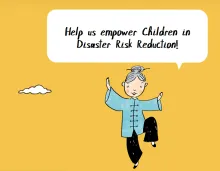
COPE Disaster Champions is a global educational initiative designed to strengthen disaster preparedness and resilience among children aged 6–12 through engaging, age-appropriate learning materials focused on disaster risk reduction.
Map
General Information
COPE Disaster Champions provides free illustrated children’s books, educational jingles and a digital platform to teach disaster preparedness and risk awareness. Through storytelling, visuals and simple action-oriented messages, the initiative empowers children to understand risks and adopt safe behaviours before, during and after disasters.
The initiative responds to the growing impact of climate-related and natural hazards on children and education systems worldwide. It aligns with international Disaster Risk Reduction (DRR) priorities, including the Sendai Framework for Disaster Risk Reduction, and supports global efforts such as Early Warnings for All, with a strong emphasis on inclusive, child-centred risk communication.
Hazard Type
Geographical Scope - Nuts
Population Size
Population Density
Needs Addressed
Limited access to age-appropriate, inclusive and multilingual disaster preparedness education for children, particularly in high-risk and resource-constrained contexts.
Children, particularly those living in hazard-prone areas or affected by displacement, language barriers or limited access to formal disaster education.
COPE Disaster Champions operates through a partnership-based governance model involving international organisations, educational institutions, creative professionals and local stakeholders.
The initiative supports preparedness by equipping children with basic risk awareness, early warning understanding and protective behaviours.
To inform and engage children, families and educators in disaster preparedness and resilience-building through accessible educational content.
- Illustrated storytelling and characters
- Educational jingles and multimedia
- Digital platform and online dissemination
- Partnerships with schools and organisations
Children are empowered primarily through knowledge and behavioural change rather than direct participation in decision-making processes.
Builds long-term resilience by embedding disaster preparedness knowledge early in life and fostering a culture of safety and prevention.
Vulnerable Groups
Governance
Emergency Preparedness
Infrastructure Readiness
Engagement Level
Empowerment Level
Implementation
- Child-centred, illustrated disaster preparedness materials
- Multilingual availability (23 languages, including all UN official languages)
- Integration of storytelling, music and digital tools
- Alignment with global DRR frameworks
- English
- Arabic
- Chinese
- French
- Russian
- Spanish
- Additional national and local languages
- COPE Disaster Champions (initiative)
- Partner organisations including UNDRR, WMO and UNICEF
Strong experience in disaster risk communication and education, supported by partnerships with leading international DRR institutions.
- Children and families
- Educators and schools
- International organisations
- Media and communication partners
- Development of hazard-specific educational content
- Translation and localisation into multiple languages
- Digital and physical dissemination of materials
- Outreach through partners and schools
Combination of external partnerships, creative production resources and digital dissemination capacities.
Ongoing initiative with iterative content development and continuous global dissemination.
Experience of the Implementing Organisation in DRM
Target Audience
Resources Required
Timeframe & Phases
Participation Results
Child-friendly communication significantly enhances understanding and retention of disaster preparedness messages.
Ensuring cultural relevance, maintaining engagement across diverse contexts and reaching children with limited digital access.
Focuses on preventive education and awareness as primary risk mitigation measures.
Risk & Mitigation Plan
Scalability and Sustainability
Sustainability is supported through open access resources, strong partnerships and continuous content reuse and adaptation.
Highly scalable and adaptable across hazards, regions and languages.
Use of digital platforms, multimedia content and online dissemination to maximise global reach.
Content development, illustration, translation and digital production costs.
Primarily digital hosting, coordination and outreach costs.
Early, inclusive and engaging disaster education for children is a critical investment in long-term community resilience.