A role-playing game that simulates a cyber-attack on a community's critical infrastructure. Participants must collaborate to prioritize resources, communicate with the public, and maintain essential services under stress.
Ready.gov provides a comprehensive framework for individual and community preparedness, focusing on four pillars: staying informed, making a plan, building a kit, and getting involved.
Contribution
The Fire Kills campaign (UK) aims to reduce deaths and injuries from home fires by promoting prevention, early detection, and escape plans. The focus is on increasing the number and proper placement of smoke detectors (including interconnected ones) and improving safe behaviors at home. It offers practical advice on common risks and what to do in the event of a fire. It focuses on vulnerable groups (elderly, disabled, and hearing-impaired) and provides information on possible local home fire safety visits.
Case
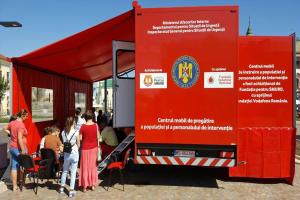
The "SMURD Mobile Training Center / Caravan – Be prepared" project is a truck-based mobile classroom providing hands-on first aid and emergency preparedness training to various locations in Romania.
It includes lectures and demonstrations using equipment and simulators, led by IGSU/SMURD staff.
The goal is to increase citizens' ability to respond appropriately when "every second counts," reducing the risks associated with events such as fires, floods, or earthquakes.
Case
A structured system where Japanese municipalities and welfare institutions create personalized evacuation strategies for vulnerable people, verified through inclusive drills and coordinated with local support networks.
Contribution
“Who’s most at risk?” is a tested and freely available educational toolkit consisting of teacher’s notes, pupil activity sheets, character profiles, key-word lists, chance cards and hazard scenario cards. It supports a 15–20 minute role-play in which pupils adopt the identities of people living in different parts of the world and physically move forwards or backwards according to statements about age, income, education, housing, disability, location and access to information or savings.
Solution
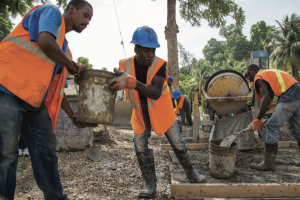
The CBDRR approach developed by Solidarités International is a participatory methodology that places affected communities at the centre of disaster risk analysis, planning, and action. It combines local knowledge with technical expertise to identify hazards, vulnerabilities, and capacities, and translates this shared analysis into concrete preparedness, mitigation, and response measures implemented at community level.
Solution
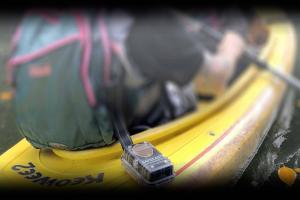
Safecast designs and deploys open hardware and software tools that enable citizens and experts to collect, share and access high-quality environmental data. Originating from a post-disaster information gap, Safecast promotes transparency, public trust and evidence-based decision-making through open data and community-driven monitoring.
Contribution
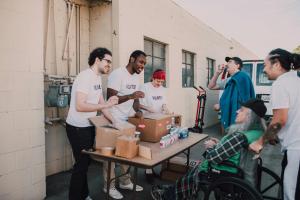
ROHCMUM is a formalised coalition (incorporated since 2007) that convenes community and humanitarian organisations, municipal civil security, and Québec public-safety actors.
It focuses on preparedness and operational coordination for “major disasters,” improving how organisations mobilise, communicate, and deliver support to affected populations.
Its core offer includes structured workshops (initiation, emergency measures plan, business continuity, mobilisation/coordination) facilitated by specialists.
Case
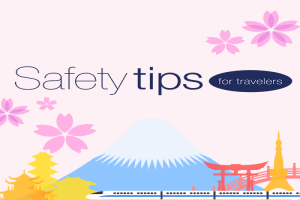
Safety tips combines a traveler-focused safety website and a push-alert smartphone app to help people in Japan react quickly during hazards.
It provides multilingual alerts (e.g., earthquake/tsunami/weather) and practical guidance such as evacuation flowcharts and helpful phrases for communicating locally.
The emergency section organizes procedures to follow for multiple scenarios (earthquake, tsunami warnings, evacuation information, volcanic warnings, heat stroke alerts).
Solution