Ready.gov provides a comprehensive framework for individual and community preparedness, focusing on four pillars: staying informed, making a plan, building a kit, and getting involved.
The Fire Kills campaign (UK) aims to reduce deaths and injuries from home fires by promoting prevention, early detection, and escape plans. The focus is on increasing the number and proper placement of smoke detectors (including interconnected ones) and improving safe behaviors at home. It offers practical advice on common risks and what to do in the event of a fire. It focuses on vulnerable groups (elderly, disabled, and hearing-impaired) and provides information on possible local home fire safety visits.
Case
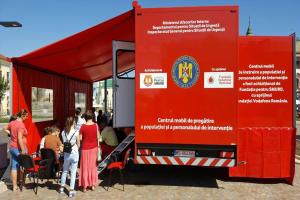
The "SMURD Mobile Training Center / Caravan – Be prepared" project is a truck-based mobile classroom providing hands-on first aid and emergency preparedness training to various locations in Romania.
It includes lectures and demonstrations using equipment and simulators, led by IGSU/SMURD staff.
The goal is to increase citizens' ability to respond appropriately when "every second counts," reducing the risks associated with events such as fires, floods, or earthquakes.
Case
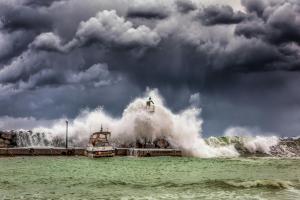
The Regional Tsunami Project is a regional initiative launched in 2017 by UNDP with funding from the Government of Japan to strengthen tsunami preparedness in schools and communities across the Asia-Pacific. The project works with governments and school systems to institutionalize risk education and evacuation drills, improve evacuation planning and routes, and make the drills regular and replicable.
Case
ARC’s CBDP toolkit helps communities turn data on risks, vulnerabilities, and capacities into a practical disaster preparedness and response plan. It was developed in Afghanistan, where poverty, weak infrastructure, and environmental degradation increase the impact of floods, droughts, landslides, and other hazards. The approach is participatory (focus groups, observation, feedback) and involves local structures such as the CDMC/CDC, with actions phased into emergency, short, medium, and long-term. It also integrates environmental aspects and climate projections.
Solution
The Territori Aperti Disaster Preparedness Toolkit is a dynamic tool that gathers existing experiences and transforms them into useful recommendations and procedures for public bodies and citizens.
Solution
This guide provides practical strategies for engaging children as active participants in disaster risk reduction. It frames children not merely as vulnerable groups but as agents capable of contributing ideas, identifying risks, and supporting community preparedness. Through participatory methods, case studies, and hands-on activities, the guide demonstrates how children can be meaningfully involved in planning, prevention, and resilience-building at the community level.
Solution
A structured system where Japanese municipalities and welfare institutions create personalized evacuation strategies for vulnerable people, verified through inclusive drills and coordinated with local support networks.
Contribution
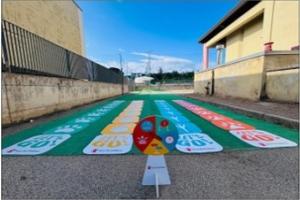
The project consists of three structured workshops: Explore (building awareness of risk and resilience through storytelling and games), Experience (role-playing emergency scenarios to practice safe behaviors), and Participate (hands-on engagement via VR or the dynamic team game “Corri il Rischio”). The initiative equips children with practical skills for emergency preparedness and fosters collaboration, decision-making, and climate crisis awareness, positioning Feel Safe as a pioneering model for integrating technology and education in resilience-building.
Case
The toolkit is aimed at school disaster management, risk prevention, and community awareness. It contains three integrated parts, which are a Participatory School Disaster Management handbook, a school disaster management plan form templates for school use and annual review, and student & community participatory activities.
It is designed to be updated over time (ring-binder approach) and adapted to different contexts.
Solution