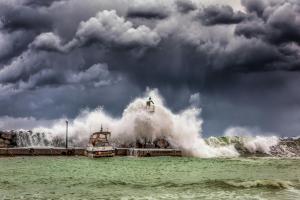
The Regional Tsunami Project is a regional initiative launched in 2017 by UNDP with funding from the Government of Japan to strengthen tsunami preparedness in schools and communities across the Asia-Pacific. The project works with governments and school systems to institutionalize risk education and evacuation drills, improve evacuation planning and routes, and make the drills regular and replicable.
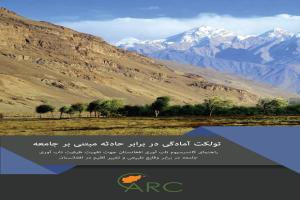
ARC’s CBDP toolkit helps communities turn data on risks, vulnerabilities, and capacities into a practical disaster preparedness and response plan. It was developed in Afghanistan, where poverty, weak infrastructure, and environmental degradation increase the impact of floods, droughts, landslides, and other hazards. The approach is participatory (focus groups, observation, feedback) and involves local structures such as the CDMC/CDC, with actions phased into emergency, short, medium, and long-term. It also integrates environmental aspects and climate projections.
Solution
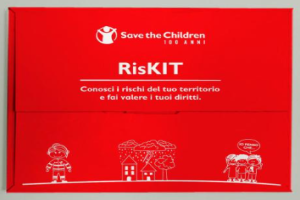
RisKIT is an educational game designed for primary schools that combines learning and fun to raise awareness among children about environmental risks and prevention measures. It includes practical exercises such as creating a risk calendar and an emergency kit, while also integrating knowledge of children’s rights in crisis situations. The goal is to develop collaboration and responsibility skills from an early age.
Solution
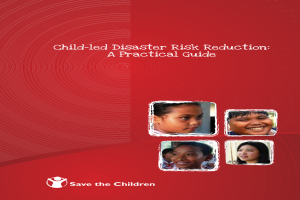
This guide provides practical strategies for engaging children as active participants in disaster risk reduction. It frames children not merely as vulnerable groups but as agents capable of contributing ideas, identifying risks, and supporting community preparedness. Through participatory methods, case studies, and hands-on activities, the guide demonstrates how children can be meaningfully involved in planning, prevention, and resilience-building at the community level.
Solution
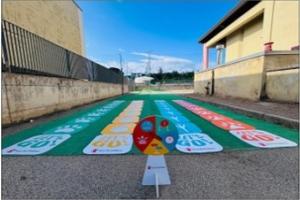
The project consists of three structured workshops: Explore (building awareness of risk and resilience through storytelling and games), Experience (role-playing emergency scenarios to practice safe behaviors), and Participate (hands-on engagement via VR or the dynamic team game “Corri il Rischio”). The initiative equips children with practical skills for emergency preparedness and fosters collaboration, decision-making, and climate crisis awareness, positioning Feel Safe as a pioneering model for integrating technology and education in resilience-building.
Case
The toolkit is aimed at school disaster management, risk prevention, and community awareness. It contains three integrated parts, which are a Participatory School Disaster Management handbook, a school disaster management plan form templates for school use and annual review, and student & community participatory activities.
It is designed to be updated over time (ring-binder approach) and adapted to different contexts.
Solution
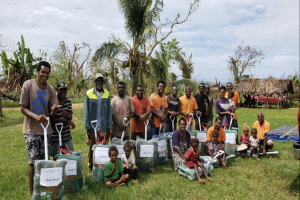
The case illustrates how disability-inclusive DRR has been advanced in Vanuatu by shifting from ad-hoc inclusion to more systematic engagement of persons with disabilities and their representative organisations in preparedness, response planning, and community decision-making.
Case
COPE Disaster Champions provides free illustrated children’s books, educational jingles and a digital platform to teach disaster preparedness and risk awareness. Through storytelling, visuals and simple action-oriented messages, the initiative empowers children to understand risks and adopt safe behaviours before, during and after disasters.
Contribution
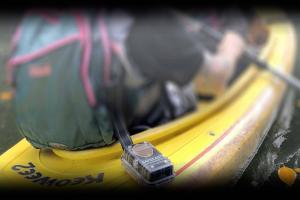
Safecast designs and deploys open hardware and software tools that enable citizens and experts to collect, share and access high-quality environmental data. Originating from a post-disaster information gap, Safecast promotes transparency, public trust and evidence-based decision-making through open data and community-driven monitoring.
Contribution
EDURES provides a comprehensive conceptual and operational toolkit for assessing, planning and strengthening the resilience of educational ecosystems, enabling education authorities and stakeholders to prepare for, respond to and adapt to crises while ensuring continuity, accessibility and democratic values in education.
Contribution