A role-playing game that simulates a cyber-attack on a community's critical infrastructure. Participants must collaborate to prioritize resources, communicate with the public, and maintain essential services under stress.
“Who’s most at risk?” is a tested and freely available educational toolkit consisting of teacher’s notes, pupil activity sheets, character profiles, key-word lists, chance cards and hazard scenario cards. It supports a 15–20 minute role-play in which pupils adopt the identities of people living in different parts of the world and physically move forwards or backwards according to statements about age, income, education, housing, disability, location and access to information or savings.
Solution
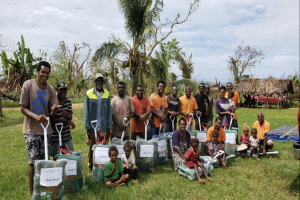
The case illustrates how disability-inclusive DRR has been advanced in Vanuatu by shifting from ad-hoc inclusion to more systematic engagement of persons with disabilities and their representative organisations in preparedness, response planning, and community decision-making.
Case
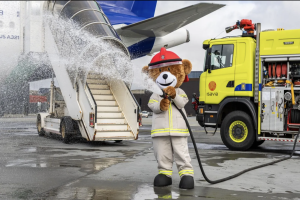
Bjørnis is a child-centred risk communication and psychosocial support initiative that uses a firefighter teddy bear to reduce fear, support emotional regulation, and improve children’s understanding of emergencies and safety behaviours.
Case
The case illustrates how disability-inclusive DRR has been advanced in Vanuatu by shifting from ad-hoc inclusion to more systematic engagement of persons with disabilities and their representative organisations in preparedness, response planning, and community decision-making.
Contribution